
The Biological Consequences of Early Life Stress and Adversity
Mission
The mission of the Environmental and Social Epigenetics (EASE) Research Lab is to (1) discover how social and environmental exposures become biologically embedded in the body, and to (2) translate these discoveries into diagnostics and therapeutics that promote human flourishing.
Why We Research
Two miles apart, but a generational difference in life expectancy
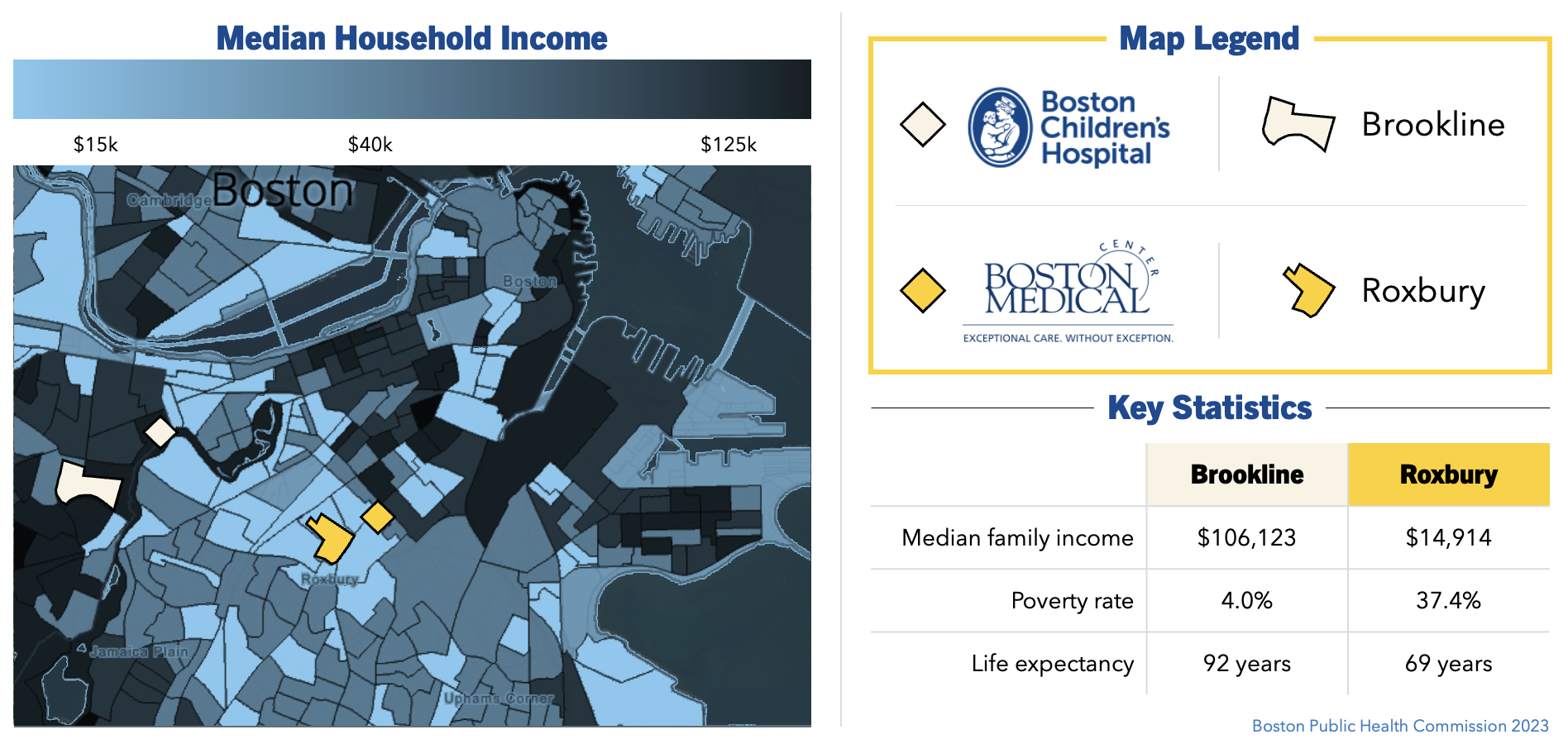
The EASE Research Lab is dedicated to transforming how we diagnose and treat the biological consequences of early life stress and trauma. Exposure to chronic adversity in childhood is associated with a four-fold increase in depression, a 30-fold increase in suicide risk, and a markedly elevated risk of dementia, illustrating that stress can dramatically shape lifelong disease vulnerability. What elevates this to a public health emergency is that nearly 1 in 4 children today in the U.S. experience chronic levels of stress, but we currently lack a single diagnostic or therapeutic intervention to combat this immense problem.
One profound example, highlighted above, shows that the life expectancy in two neighborhoods just two miles apart within the city of Boston differs by 25 years, an entire generation! We believe that this is driven by childhood and lifetime exposures to environmental and social stressors that have a significant impact on overall lifespan
Co-led by Ravi Raju and Jason Zhang, the EASE Research Lab profiles the brain and its connection to the GI tract and gut microbiome in both human and preclinical models to uncover the molecular pathways through which environmental and social experiences impact health and well-being. By identifying these pathways, particularly those governing molecular and cellular functioning, we aim to provide a foundation for developing biomarkers and testing interventions designed to promote resilience and reverse stress-induced dysfunction.
How We Research
Preclinical Stress Models
We employ animal models and cell systems to dissect how individuals respond to changes in the social environment, and then test resilience-promoting interventions.
Human Stress Insights
We leverage sequencing technologies on human samples and re-analysis of existing datasets to directly ask how the environment and stress influence physiology in humans.
Community Partnerships
We are actively developing relationships with non-profit organizations to inform scientific work and provide opportunities to disseminate and translate discoveries.